



How much do glass railings cost in Toronto?
The short answer: most residential glass railings in Toronto and the GTA cost between about $150 and $300 per linear foot installed in 2026. A small interior stair project might total $2,500–$5,000, while a wrap-around balcony or a long deck run can climb well past that. But the per-foot number hides a lot, so here is what actually drives the price — and how to budget with confidence.
1. The mounting system
This is the single biggest factor. A fully frameless base-shoe (channel) system, where the glass sits in a slim aluminium shoe, is the most premium look and sits at the top of the range. Stainless-steel spigot systems — the posts you see on decks and pool fences — are more economical and extremely durable. Standoff (point-fixed) hardware, used for floating balcony panels, sits in between. During a free measure we recommend the system that suits both the setting and the budget.
2. Glass thickness and type
Standard is 12 mm tempered glass. Where the code treats the railing as a structural guard — many balconies and elevated decks — we upgrade to laminated tempered glass, which stays in place even if a pane is damaged. Laminated glass costs more but is often non-negotiable for safety and inspection. Low-iron (ultra-clear) glass, which removes the faint green tint, is an optional upgrade.
3. Interior stairs vs. straight runs
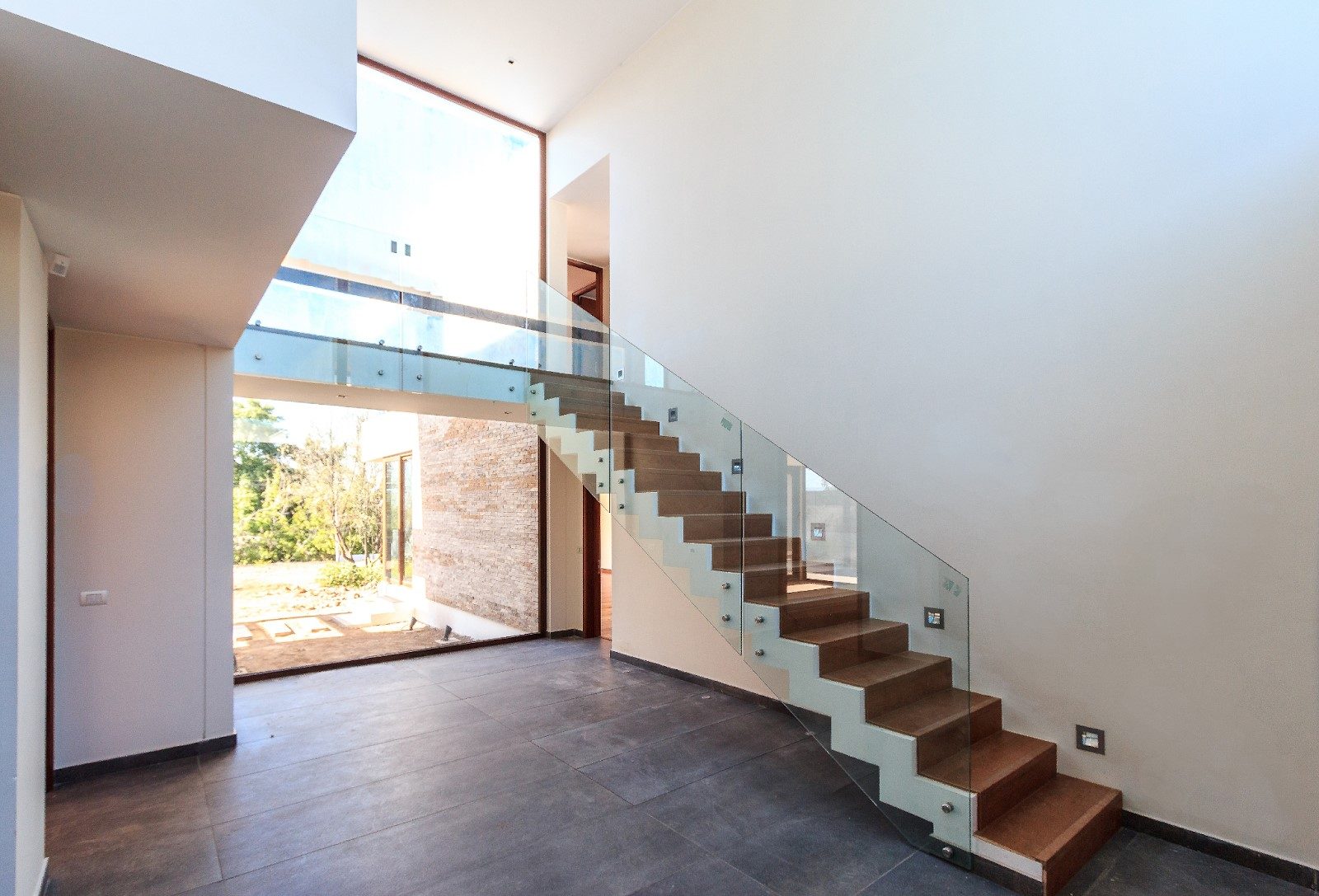
A long straight balcony guard is the most cost-effective per foot. Interior glass stair railings cost more per foot because raked (angled) panels, landings and posts require more fabrication and precision. Curved or stepped layouts add more still.
4. Handrails and hardware finish
Adding a graspable cap rail or a wall-mounted handrail — sometimes required by code on stairs — adds material and labour. Hardware finish matters too: brushed stainless, matte black and brushed gold carry different price points.
5. Site access and structure
If a deck or balcony edge needs reinforcement to carry a guard load, that is additional work we flag during the measure. Difficult access — high balconies, tight condos, long carries — can also affect labour.
Sample budgets
- Interior stair (frameless channel), ~15 ft: roughly $4,000–$6,500
- Balcony guard (spigots), ~20 ft: roughly $3,500–$6,000
- Deck railing (spigots), ~40 ft: roughly $6,000–$11,000
- Glass pool fencing, ~60 ft: roughly $9,000–$16,000
These are planning ranges, not quotes — your real number depends on the five factors above.
Glass vs. aluminum vs. wrought iron on cost
Homeowners often ask how glass compares to other railings. Aluminum railings are typically the most budget-friendly and virtually maintenance-free, which is why they are popular for long deck and porch runs where the view is less of a priority. Wrought iron sits in the middle and suits traditional and heritage homes. Glass carries a premium over both, but it is the only option that guards an edge while keeping the view and light completely open — and it is the finish buyers most associate with a high-end renovation. If budget is tight on a long run, a common approach is glass where it is seen (the main balcony or front stair) and aluminum where it is not.
How to keep the cost down without cutting corners
There are honest ways to trim a glass railing budget. Choosing spigots over a full base-shoe channel saves money while staying durable and good-looking. Keeping panels to standard heights and avoiding lots of short, angled sections reduces fabrication. Booking the measure once the deck or stairs are structurally ready avoids return trips. What you should not cut is glass rating or hardware quality — under-rated hardware loosens, and the wrong glass can fail inspection, costing far more to redo. A reputable installer will show you where to save and where not to.
What about maintenance costs?
Ongoing costs are minimal. Glass is inert, so it will not rust, rot or need repainting the way some metal and wood railings do. A periodic clean with glass cleaner keeps panels clear; stainless hardware needs only an occasional wipe. Over a ten-year horizon, a quality glass railing is often cheaper to own than a system that needs regular refinishing.
Are glass railings worth it?
For most GTA homeowners, yes. Glass railings protect an edge without blocking light or views, they suit modern and traditional homes alike, and they consistently rank among the upgrades buyers notice. Because the glass is inert, maintenance is minimal — an occasional clean is all it takes. On a balcony or a main staircase, glass is also one of the few railing upgrades that reads as genuinely premium to prospective buyers, which is why it shows up so often in renovated GTA listings. If you plan to stay, you enjoy the open view every day; if you plan to sell, it is money the market tends to reward.
Timeline: how long from quote to installed?
Budget for the calendar as well as the cash. Because glass railings are tempered to your exact sizes, they cannot be bought off a shelf — expect roughly 2–6 weeks from an approved quote to installation. The measure itself takes under an hour, and the installation is usually a single day for a home project. If you are coordinating with a deck build or a renovation, book the measure once the structure is in place so the glass is cut to final dimensions.
How to get an accurate quote
Beware of firm prices given over the phone before anyone has seen the site — they tend to change once the crew arrives. A trustworthy quote follows an on-site measure that confirms the run length, the structure and the mounting system. Ask for the price in writing, ask what glass rating is included (tempered vs. laminated), and confirm whether a handrail and any structural reinforcement are part of the number. Skyline Glass puts all of that in one fixed written quote.
Get an exact price
The only way to know your cost is a free on-site measure and a fixed written quote. Skyline Glass installs glass railings across Toronto and the GTA, from Vaughan and Mississauga to Oakville and Burlington. Explore our glass railing services or book your free measure today. Prefer metal? Compare aluminum railings and wrought iron railings.